
The shell has a round shape and may present a high profile, moderate PLUS or a moderate profile. The high profile has a smaller circumference and results in breasts with greater projection. We recommend the high profile implants for women with narrow rib cage and breasts.
Learn more about
breast augmentation
Breast augmentation, also known as breast enhancement, is a cosmetic surgery procedure that involves inserting an inflatable breast implant (prosthesis) behind the breast or the pectoral muscle (on which the mammary gland rests) to increase volume.
The procedure lasts on average about an hour and a half and is performed under general anesthesia. For this type of surgery, recovery time is approximately one week.

Dr .Mario F. Bernier,
L.M.C.C., F.R.C.S. (c), F.A.C.S.
Plastic Surgery Certificate #13322
Collège des Médecins du Québec
Dr. Mario F. Bernier is a plastic surgeon with over 30 years of experience. He is a pioneer in Québec in endoscopic breast augmentation performed through the axillary approach, leaving no scars on the breasts.
Certifications
- Plastic Surgery – Royal College of Physicians and Surgeons (C.R.M.C.C.)
- Plastic Surgery – American College of Surgeons (F.A.C.S.)
- Plastic Surgery Fellowship – Irvine University, California, USA
- Medocine – Conseil médical du Canada (L.M.C.C.)
BREAST AUGMENTATION BEFORE AND AFTER
Here is an overview of before and after photos of patients who have had a breast addition at Dr. Mario F Bernier’s clinic.
BREAST AUGMENTATION
by axillary approach by endoscopy
310cc
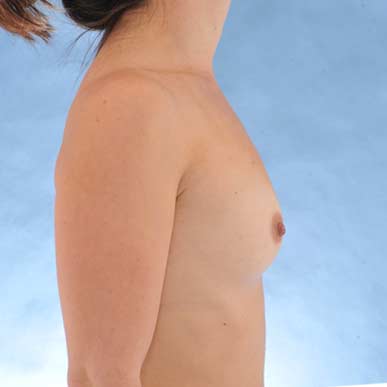
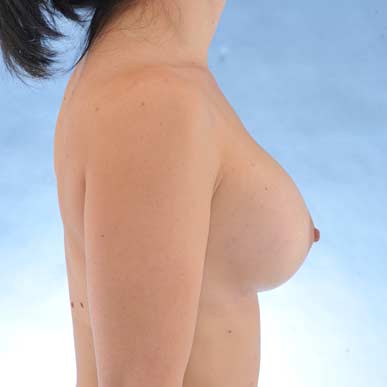
Photo for illustrative purposes only. No guarantee of results.
BREAST AUGMENTATION
by axillary approach by endoscopy
330cc

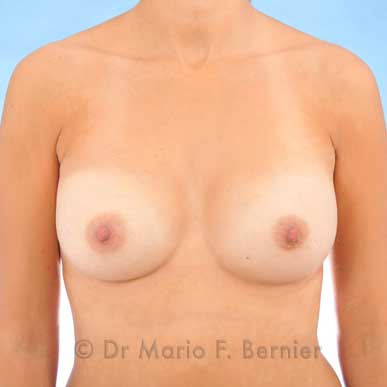
Photo for illustrative purposes only. No guarantee of results.
TYPES OF BREAST IMPLANTS
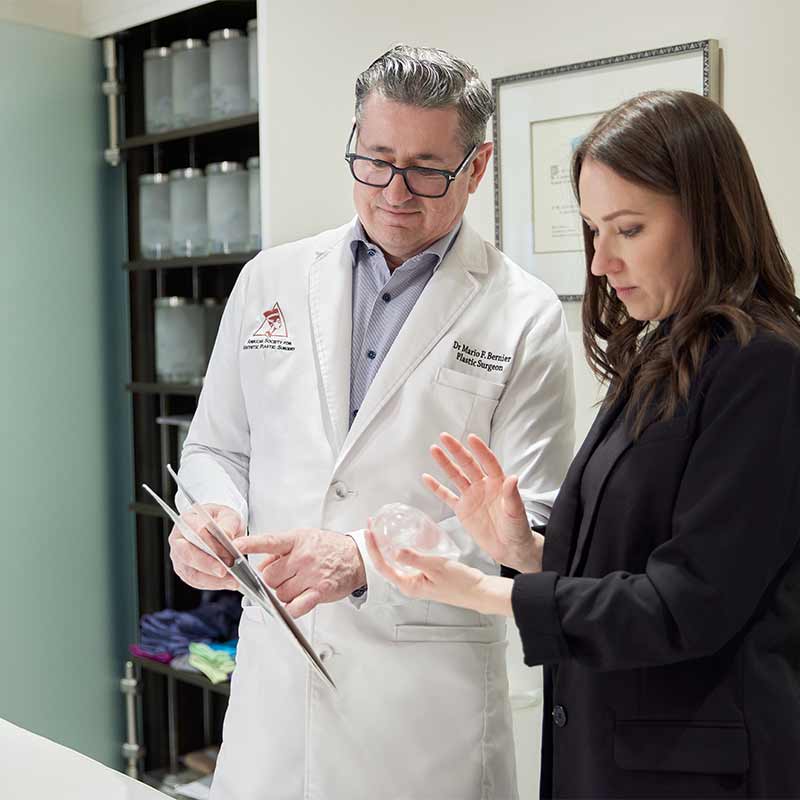
There are several types of breast implants, and all consist of a soft outer shell. Saline implants are inflatable, while silicone gel implants are pre-filled. At the Clinique de chirurgie et médecine esthétique Dr. Mario F. Bernier, we prioritize the axillary approach, which allows for breast augmentation without visible scarring. For this reason, we generally use saline breast implants (saltwater implants). This choice is also made with patient safety and long-term results in mind. You can read our article on choosing breast implants to learn more about this topic.
Shell
Saline implants
Silicone gel implants
Shell
The walls of the outer envelope are made of silicone. But let it be well understood it is not silicone gel (see silicone gel). Silicone is a material that is very biocompatible with the human organism. It is used in the fabrication of articular implants, pacemakers and artificial heart valves, condoms, lubricants and certain medications.
SALINE IMPLANTS
SALINE SOLUTION
Saline is a sterilised water solution with a 0,9% sodium (salt) concentration. Saline can easily be reabsorbed by our system. In case of leak, saline does not cause any harm, because it is similar in composition to the liquid that makes up 70% of our body.

SILICONE GEL
The breast implants that were made in the 1960’s were filled with silicone gel. This type of gel, which is at the heart of the controversy over the safety of these implants, since October 2006.
POSSIBLE CONSEQUENCES TO A RUPTURED SILICONE GEL IMPLANT
The possible consequences related to ruptured silicone gel implants are not entirely known since they are currently being studied. Nevertheless, there have been cases where the silicone gel had migrated to the chest wall, the armpit, the upper abdominal wall, the arm and the groin. Some studies have shown cases where silicone gel was found in the liver of patients with silicone gel breast implants. There were also reports of silicone gel being found in the axillaries lymphatic ganglions which then caused lymphadenopathy, even when no implant rupture was detected.Possible consequences of a silicone gel migration are the following:
- Nerve damage
- Appearance of granulomas
- Breakdown of tissues in direct contact with silicone gel
- Hardening of the breast tissues
- Alteration of the size or shape of the breast
- Pain
- Fibrous capsule calcification
IN SHORT, COHESIVE SILICONE GEL IMPLANTS:
- Require a longer incision (2.,5 cm transaxillary incision for a saline implant)
- Increase the mammary implant folds palpability (thicker implant shell)
- Require Magnetic Resonance Imaging (MRI) screenings to assess their condition. The U.S. Food and DrugAdministration (FDA) recommends that a woman should have her first MRI three years after her initial implant surgery and then every two years thereafter. The cost of MRI screening over a woman’s lifetime may exceed the cost of her initial surgery and may not be covered by medical insurance.;
- Require patients to be at least 22 years of age (while saline implants is for women 18 years of age and older)
SURGICAL Incision
There are three classic types of incisions for inserting a breast implant: the axillary approach, the periareolar approach, and the inframammary approach. Dr. Mario F. Bernier recommends the underarm incision, as he uses the endoscopic technique for the majority of patients, allowing for breast augmentation without visible scarring.
Transaxillary Incision
Periareolar Incision
Inframammary Incision
TRANSAXILLARY (UNDER THE ARMPIT)
Absence of scar on the breast
Technique by Endoscopic Surgery. Endoscopy – also called Breast Enlargement – consists in operating through short incisions using special long instruments and a small video camera attached to the endoscope which transmits an enlarged image on a monitor. This kind of surgery is very precise and reduces the risk of complications and requires a shorter recovery time;
- Technique usually used for the majority of Dr Bernier’s patients
- An almost invisible scar of 2,5 cm long in the armpit
- No scar on the breast
- Low risk of excessive bleeding
- Low risk of nipple sensitivity loss because the nerves are visible
- Massages can be started the day following the surgery
- No higher risk of complications
- Breast-feeding is possible after the surgery
- In case of complication, it is always possible to operate through the first axillary incision
- Since 1994, Dr Bernier had never reported a case of breast infection.
- The distance between the breasts is directly related to the pectoral muscle insertion. The incision site, whether it is transaxillary, inframammary or periareolar, does not alter the distance between the breasts. However, placing the implant directly behind the breast tissue (submammary placement) can help reduce the distance between the breasts.
Caution! Transaxillary incision without the endoscopic camera is not recommended, because of the substantial risk of complications for: excessive bleeding, wrong positioning of implant and loss of sensitivity.
Endoscopic Surgery represents the future of the medical world. It is notably used in orthopedics, gynecology, ENT, pediatric surgery, general surgery (intestinal) and plastic surgery. Some plastic surgeons refuse to move forward along with the technological progress, either because of lack of scientific knowledge or because of financial reasons (this technology is an expensive investment and has a high maintenance-related cost).

PERIAREOLAR (AROUND THE AREOLA)
Technique not recommended.
- Technique that may be combined with a mastopexy
- Scarring may be visible in some patients
- Increased risk of capsular contracture due to bacterial contamination of the breast implant when passing through the breast gland (biofilm)
- Increased risk of excessive bleeding and loss of nipple sensation due to limited visualization of the nerves
- Increased risk of infection due to passing through the breast gland
- Possible mammography abnormalities due to scar tissue within the breast gland
- Potential difficulty with breastfeeding

INFRAMAMMARY (IN THE FOLD UNDER THE BREAST)
Non-endoscopic technique.
- Increased risk of infection
- Without an endoscopic camera, there is limited visualization of anatomical structures by the surgeon, which increases the risk of complications
- Increased risk of loss of nipple sensation due to poor visualization of the nerves
- Increased risk of excessive bleeding
- Scarring may be visible
- Possible migration of inframammary scars if the breast implants shift downward
- Potential difficulty with breastfeeding

PLACEMENT OF
THE IMPLANT
Whether submuscular, subglandular or subfascia, check out the pros and cons of implant placement choices.
Submuscular Implant
Subglandular (Not Recommended)
Behind the muscular fascia (Not Recommended)
BEHIND THE MUSCLE
Subpectoral placement for patients with minimal breast tissue (AA/A, B or C-cup size)
Advantages :
- Better covering of the implant
- A natural appearance
- Lower risk of implant folds palpability
- Better for patient with minimal glandular tissue
- Better view of breast tissue when undergoing a mammography
- Breast-feeding is possible after the surgery
Disadvantages :
- May be more painful
- Higher risk of lateral implant displacement
- Possible deformation of the breasts when contracting the pectoral muscle
- Does not alter the distance between the breasts (the distance remains the same before and after the surgery)

BEHIND BREAST TISSUE (non recommended)
For patients with more breast tissue (B+ or C cup size)
Advantages :
- May be less painful
- Can help reduce the distance between the breasts
- No deformation of the breasts when contracting the pectoral muscles
- Lessened risks of implant displacement
Disadvantages :
- Unnatural appearance of the breasts in the long term
- Difficult imaging during mammography exam
- More visible and palpable implants
- Breast-lift surgery is impossible after this surgery
- Greater likelihood of capsular contracture
- Possible difficulty at breast-feeding

Behind the muscular fascia
For patients with more breast tissue (B+ or C cup size).
Same advantages and disadvantages as the submammary placement (see above). Ten years ago, it was a very popular technique, but we have noted that there was no advantage and the same risks of complication compared to the behind breast tissue.
BREAST SURGERY
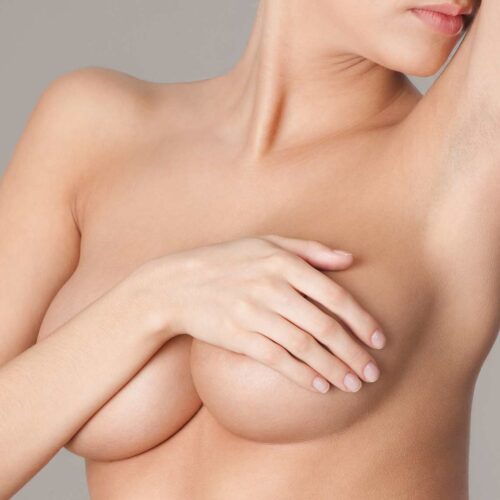
Once the surgeon has made the incision, the next step is to prepare the pocket to receive the breast implant using specific surgical instruments. The unfilled saline breast implant is inserted and positioned either under the breast gland or beneath the pectoral muscle. Once in place, the breast implant is then filled with saline (through aseptic transfer) to achieve the desired volume. The procedure lasts on average about an hour and a half and is performed under general anesthesia. Recovery time for endoscopic breast augmentation is approximately one week.
ENDOSCOPY
Every plastic surgeon‘s ultimate dream is to be able to whisk away all traces of surgery or scarring with a magic wand. At present, their wish has partly become true thanks to endoscopy.
Endoscopy consists in making a small incision several millimetres long through which surgical instruments and a minuscule camera are inserted. The camera then transmits an enlarged image of the body’s internal structures to a monitor, enabling the surgeon to see clearly on screen the work he is performing. Thus, long incisions for a direct view are no longer necessary. Breast surgery performed by endoscopy at Dr. Bernier’s clinic and not the least; is exclusively breast augmentation.
Endoscopic surgery is the future in the medical world. Endoscopic surgery is practiced in orthopedics, gynecology, ENT, pediatric surgery, general (intestinal) surgery and plastic surgery.
Some plastic surgeons refuse the technological advancement of endoscopic surgery for lack of scientific knowledge or for financial reasons since this technique requires a significant investment and high maintenance costs.
What is the “Internal Bra”?
In the majority of cases, plastic surgeons prefer to position breast implants in the subpectoral plane (behind the pectoral muscle), for a more natural appearance. Experience has shown that retroglandular positioning (in front of the pectoral muscle), or under the pectoral muscle fascia, increases the risk of contracture and calcification of the fibrous capsule. This risk is higher with silicone implants and lower with saline breast implants. However, the main disadvantage of the subpectoral position, regardless of the type of breast implant used, is the increased risk of breast implant displacement. This is all the more frequent in patients with highly developed pectoral muscles, or when using larger-volume breast implants.

The term “internal bra” is unscientific and is mainly used for “marketing” purposes.
During breast augmentation, we create a type of internal support to stabilize the position of the implants over the long term. Using an endoscopic axillary approach, I perform an inferior disinsertion of the pectoralis muscle, preserving a muscle band of around 2 cm and limiting lateral dissection of the pectoralis muscle. As a result, the muscle band stabilizes the implants over the long term.
Also, in cases of slight breast ptosis (slightly drooping breasts), I proceed with a partial median section of the pectoral muscle, creating an internal and external band of muscle that stabilizes the breast implant over the long term.
In the infra-mammary approach, some surgeons use absorbable sutures to attach the infra-mammary fold to the ribs. Because the suture is absorbable, in some cases tissue that is too thin will not support the weight of the implant against gravity over the long term, or the tissue may tear.
The technique of capsulorrhaphy with sutures has been used for decades in the case of secondary revision for displaced breast implants. This involves closing with sutures, a space that has become too large. In addition to being technically difficult, recurrence and breast deformity were frequent.
The constant evolution of medicine
The latest trend, according to a scientific article by Dr. Bradley Calobrace (Aesthetic Surgery Journal, 2020), is the “Popcorn” technique, which stabilizes the position of breast implants over the long term with a low complication rate. The technique involves using thermal energy (cauterization) to reduce and redefine the space inside the fibrous capsule, ultimately repositioning the breast implant. With this technique, the use of sutures is no longer necessary. In certain cases of multiple recurrence, where the fibrous capsule is very thin, or in cases of severe thoracic deformity, biological (Alloderm) or synthetic (Galaflex) membranes can be used to reinforce the fibrous capsule.
Inner bra, the miracle solution?
Although the name suggests total support, the internal bra has its limits. It would be wrong to assume that one of these techniques will have the same effect as a breast lift. Whichever technique you use, it won’t give you the look of a “push-up” bra. It’s up to your surgeon to discuss your expectations with you, versus the reality, and determine the most appropriate surgical alternative for you.
Testimonials following a
breast augmentation
I had a breast augmentation. The technique and professionalism of Dr. Bernier and his entire team is incredible. The result was beyond my expectations, the scar under the armpit was barely visible. But above all, a breast that looks like what I had always dreamed of having. A big thank you because in my case it's more than a surgery, it's a daily trust.
Céline Enea
24/07/2021
I had a saline breast augmentation in December 2001. It took me a long time to comment VERY POSITIVELY: throughout the process (consultation, surgery, follow-up) A1. My choice was made with Dr. Bernier's professional advice regarding my choice of implants, their size and the consequences. I was a little disappointed that I did not have much leeway on the volume. The maximum for my physiognomy was the 2nd size of the smallest implants... I was a little disappointed but so convinced when he told me "if you want bigger, I won't do them. It's about aesthetics, not size." What sound and knowledgeable advice!!! It gives a good indication of the surgeon's conscientiousness and professionalism. I have never regretted it! Thanks again Doc 🙂
Annie Olivier
08/02/2018
PRICE FOR A BREAST SURGERY
Breast augmentation
Clinical and surgical fees (breast augmentation without scar on breast) anesthesia fees, postoperative bra, and postoperative follow-ups. Sale taxes non-included. *Only a medical evaluation with Dr Bernier can determine if you are an ideal candidate for the surgery. **Price may vary, a medical evaluation with Dr Bernier is required.
Price upon request
Mastopexy (breast lift)
Clinical and surgical fees (3 to 4 hours surgery), anesthesia fees, postoperative bra, postoperative follow-ups. Sale taxes non-included. *Only a medical evaluation with Dr Bernier can determine if you are an ideal candidate for the surgery. **Price may vary, a medical evaluation with Dr Bernier is required.
Price upon request
Breast reduction
Clinical and surgical fees (4 to 5 hours surgery), anesthesia fees, postoperative bra, postoperative follow-ups. Sale taxe non-included. *Only a medical evaluation with Dr Bernier can determine if you are an ideal candidate for the surgery. **Price may vary, a medical evaluation with Dr Bernier is required. ***250g and less per breast (breast reduction for breasts over 250g is covered by the Régie de l’assurance maladie du Québec (RAMQ) and performed by a plastic surgeon in a hospital setting).
Upon request
Inverted nipple(s)
This surgery is only available in conjunction with a breast augmentation.
FAQ
Dr. Bernier is recognized for his expertise in endoscopic transaxillary breast augmentation, a technique that leaves no visible scars on the breasts by using a small incision in the natural fold of the underarm.
The evaluation is done during a medical consultation. A good candidate is generally in good health and has realistic expectations. In cases of severe ptosis (sagging), other procedures (such as a breast lift) may be recommended.
The implants are often placed behind the pectoral muscle (subpectoral placement) to achieve a more natural appearance and a theoretically reduced risk of certain long-term complications.
Thanks to the endoscopic transaxillary technique, the scars are discreet and hidden in the natural fold of the underarm, which avoids visible scars on the chest.
The procedure generally lasts about 1 hour and 30 minutes under general anesthesia. Initial recovery usually takes about one week, with a gradual return to normal activities according to the surgeon’s recommendations.
Dr. Bernier often prefers saline implants (saltwater implants), as they can provide a natural appearance with certain safety advantages, particularly in the event of deflation.
During the consultation, the surgeon evaluates your anatomy, discusses your expectations, and together you choose the size, shape, and surgical plan that best suit your body and goals.
Light activities can often be resumed after a few days, but physical training is prohibited for one month following the procedure, according to the post-operative guidelines.
CONSULTATION REQUEST for a breast augmentation
Are you considering breast augmentation surgery? Do not hesitate to contact us for more information or make an appointment for a consultation at our clinic in Laval!